Rioja, La · Rioja
Calahorra
One of the most important cities in Roman Spain, known then as Calagurris, today known as the 'city of vegetables' for its fertile flood plains.
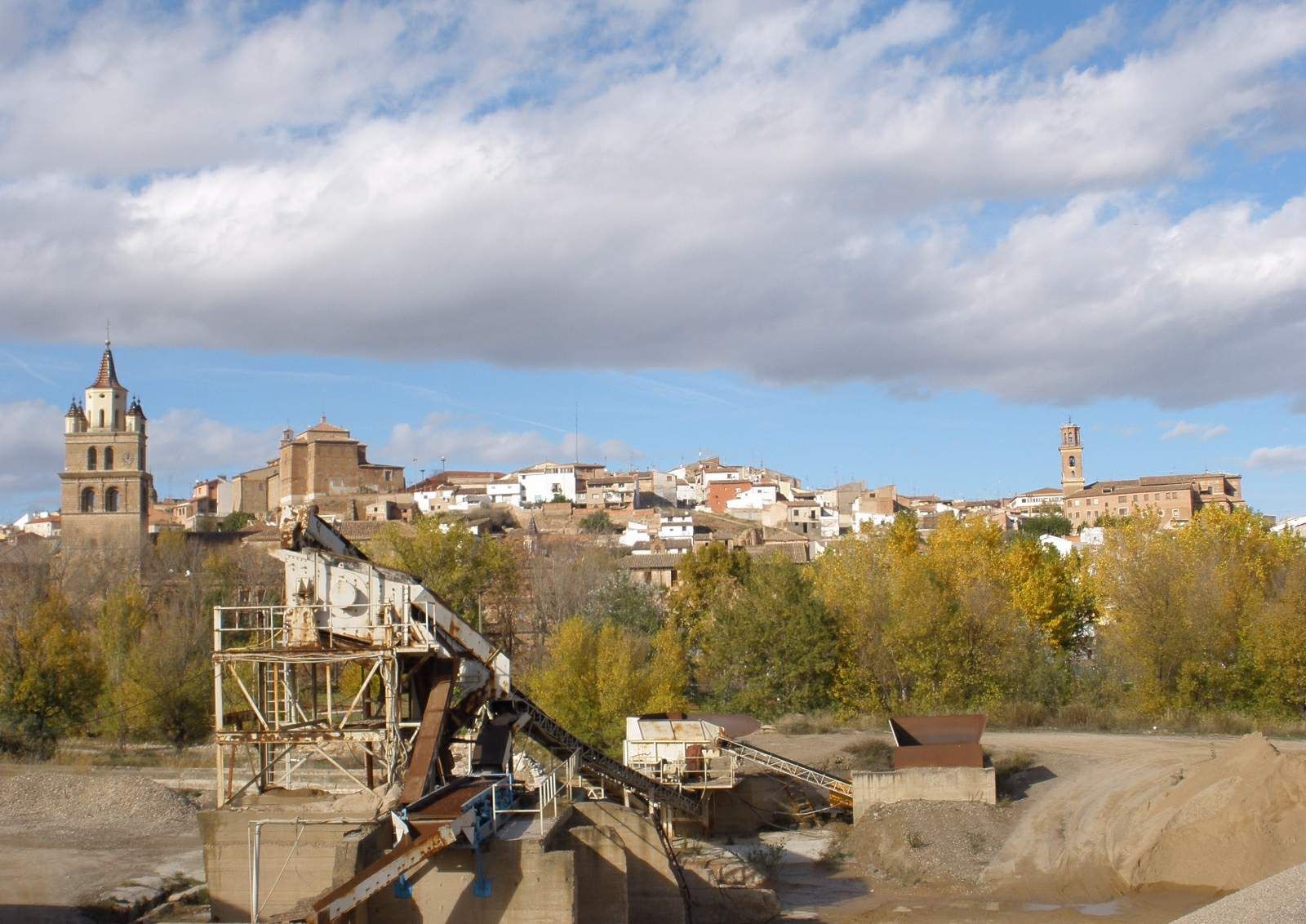

Living in Calahorra
Calahorra is a working Riojan town of 25,000 on the Cidacos, one of the great cities of Roman Spain — then Calagurris — and still known as the 'city of vegetables' for the produce of its fertile flood plains. It's a genuinely mixed agricultural town: about three-quarters Spanish-born, with sizeable Colombian, Moroccan and Romanian communities drawn by the land work. Summers are warm around 30°C, winters cool near 7°C. It has its own hospital, and Logroño, the regional capital, is about forty minutes away.
Calahorra's Spainability Scores — by who's moving
Not our opinion: we ran the same scoring engine behind the quiz for six settler profiles across all 8,132 municipalities. Each score is Calahorra's percentile for that group — 87 means it beats 87% of the towns we could score. How scoring works.
Higher than 64% of the 8,088 Spanish municipalities we could score for retiring couples.
One of the most important cities in Roman Spain, known then as Calagurris, today known as the 'city of vegetables' for its fertile flood plains. A strong pick for a retiring couple — a hospital in town and a health centre close by.
- Winter average temp 7.5°C
- Drive to a hospital 0 min
- Surgical wait (region) 78 days
- Registered long-let rent €5.4/m²·mo
Higher than 55% of the 8,088 Spanish municipalities we could score for American retirees.
One of the most important cities in Roman Spain, known then as Calagurris, today known as the 'city of vegetables' for its fertile flood plains. A strong pick for American retirees — a hospital in town and a health centre close by.
- Winter average temp 7.5°C
- Drive to a hospital 0 min
- U.S.-born residents 0.36 per 1,000
- Registered long-let rent €5.4/m²·mo
Higher than 23% of the 2,555 Spanish municipalities we could score for families.
One of the most important cities in Roman Spain, known then as Calagurris, today known as the 'city of vegetables' for its fertile flood plains. A strong pick for a family with school-age kids — a hospital in town and 25,292 people.
- Schools in town 12
- PISA maths (region) 493
- Registered long-let rent €5.4/m²·mo
- Drive to a hospital 0 min
Higher than 18% of the 2,555 Spanish municipalities we could score for heat-averse settlers.
One of the most important cities in Roman Spain, known then as Calagurris, today known as the 'city of vegetables' for its fertile flood plains. A strong pick if you can't stand hot summers — a hospital in town and a real food scene.
- Summer high (Jul–Aug) 30.5°C
- Rainy days a year 70 days
- Summer water stress (WEI+) 32
- Winter average temp 7.5°C
Higher than 17% of the 2,555 Spanish municipalities we could score for remote workers.
One of the most important cities in Roman Spain, known then as Calagurris, today known as the 'city of vegetables' for its fertile flood plains. A strong pick for a remote-working couple — 25,292 people and a hospital in town.
- 100 Mbps+ coverage 98%
- Drive to nearest airport 74 min
- Registered long-let rent €5.4/m²·mo
- Summer high (Jul–Aug) 30.5°C
Higher than 14% of the 2,555 Spanish municipalities we could score for budget-first coastal settlers.
One of the most important cities in Roman Spain, known then as Calagurris, today known as the 'city of vegetables' for its fertile flood plains. A strong pick for coastal living on a budget — 25,292 people and a hospital in town.
- Registered long-let rent €5.4/m²·mo
- Net income per person €13,348
- Summer high (Jul–Aug) 30.5°C
What is the climate like in Calahorra?
Calahorra's reported winter average is 7.5°C, while July–August highs reach 30.5°C.
Climate
- Winter average temp
- 7.5°C top 43% of 8,131 towns 0.3°C below the Spanish average (7.8°C)
- Summer high (Jul–Aug)
- 30.5°C top 49% of 8,131 towns 0.3°C above the Spanish average (30.2°C)
- Rainy days a year
- 70 days bottom 37% of 8,088 towns about the Spanish average (69 days)
- Sunshine estimated
- 6.6 h/day bottom 20% of 3,829 towns 9% less than the Spanish average (7.2 h/day)
- Summer water stress (WEI+) regional estimate
- 32 top 35% of 8,033 towns 24 below the Spanish average (56)
- River-flood depth (T=100, town centre) estimated
- 0 m top 1% of 8,129 towns 0.04 m below the Spanish average (0.04 m)
- River-flood risk score estimated
- 0 top 1% of 8,129 towns about the Spanish average (0)
- Wildfire burn rate (2010–23)
- 0.17 ha/km² bottom 39% of 8,132 towns 2.14 ha/km² below the Spanish average (2.31 ha/km²)
- Forest fires (2010–23)
- 4 bottom 25% of 8,132 towns 2 below the Spanish average (6)
- High fire-weather days (province) regional estimate
- 26.3% bottom 15% of 8,130 towns 3.4% above the Spanish average (22.9%)
The year, month by month
AEMET 30-year climate normals — what a January or an August actually feels like, not the annual average.
How good is healthcare in Calahorra?
Calahorra's nearest health centre is 1.4 km away, and the reported hospital drive is 0 min.
Healthcare
- Drive to a hospital
- 0 min top 1% of 8,132 towns
- Nearest health centre
- 1.4 km top 7% of 8,132 towns
- Surgical wait (region) regional estimate
- 78 days #4 of 17 regions, −25 days vs national 28% less than the Spanish average (108 days)
What are schools like in Calahorra?
Calahorra has 12 schools in town; the nearest international school is 44 km away.
Schools
- Schools in town
- 12 top 5% of 7,042 towns
- Nearest international school
- 44 km bottom 49% of 8,132 towns
- PISA maths (region) regional estimate
- 493 #5 of 17 regions, +14 vs national 12 above the Spanish average (481)
How much does it cost to live in Calahorra?
Calahorra's reported asking price is €1,472/m².
Cost & economy
- Home price
- no local data
- Asking price
- €1,472/m² asking · Fotocasa Jun 2026 · small sample
- Registered long-let rent
- €5.4/m²·mo
- Registered rent p25
- €4.47/m²·mo
- Registered rent p75
- €6.58/m²·mo
- Registered-rent yield
- no reliable sale-price data — yield not imputed
- Net income per person
- €13,348 bottom 35% of 8,059 towns 8% less than the Spanish average (€14,495)
- Income growth ’18–’23
- 19.2% bottom 15% of 6,605 towns
Which languages are used in schools in Calahorra?
Spanish is the only region-wide official language in La Rioja, and Spanish-medium teaching is the public-school default. Individual bilingual and international programmes can use other languages, so check the specific school. See the La Rioja region guide for the wider regional context.
What is the community like in Calahorra?
Calahorra's reported population is 25,292.
Who lives here
- Population
- 25,292
- Born in Spain
- 74.6% 14.2% below the Spanish average (88.8%)
- Born elsewhere in EU/UK
- 4% 0.1% above the Spanish average (3.8%)
- U.S.-born residents
- 0.36 per 1,000
How easy is it to get around Calahorra?
Calahorra is a reported 74 min drive from the nearest airport, with 95% fibre-to-home coverage.
Getting around
- Drive to nearest airport
- 74 min top 50% of 8,132 towns
- Fibre-to-home coverage
- 95% top 28% of 8,132 towns 16% above the Spanish average (79%)
- 100 Mbps+ coverage
- 98% top 23% of 8,132 towns 15% above the Spanish average (83%)
Numbers: Spainability town dataset, derived from INE, AEMET, Mitma and the Catastro. Registered long-let rent is SERPAVI declared-contract data; its p25–p75 values show the observed band. Registered-rent yield is gross, excludes costs and is never imputed. Percentile chips count only the municipalities that report the figure — the "of n" says how many. Region-ranked figures (PISA, surgical waits) compare Spain's 17 comunidades autónomas. A blank means no municipal-level figure is published — not a zero.
How does Calahorra fit you?
These are the town's numbers. Whether it's your town depends on what you're optimising for — winter sun or mild summers, a city or a village, short medical waits, an easy flight home. The 3-minute quiz scores Calahorra against every one of Spain's 8,132 municipalities on your priorities. It sits about 40 min from Logroño, if that's your anchor.
Take the quiz — rank Calahorra for you →Questions to verify locally
- Ask whether current long-let rents match the registered-contract figure.
- Ask what recent sales closed at; the published figure is asking price.
- Test fibre speed at the exact address, not the town average.
- Visit local schools and confirm places for incoming families.
- Confirm health-centre registration and opening hours in person.
Nearby towns
Other places we profile within easy reach.